UNDERSTAND IT VISUALLY
A length unit. An area unit.
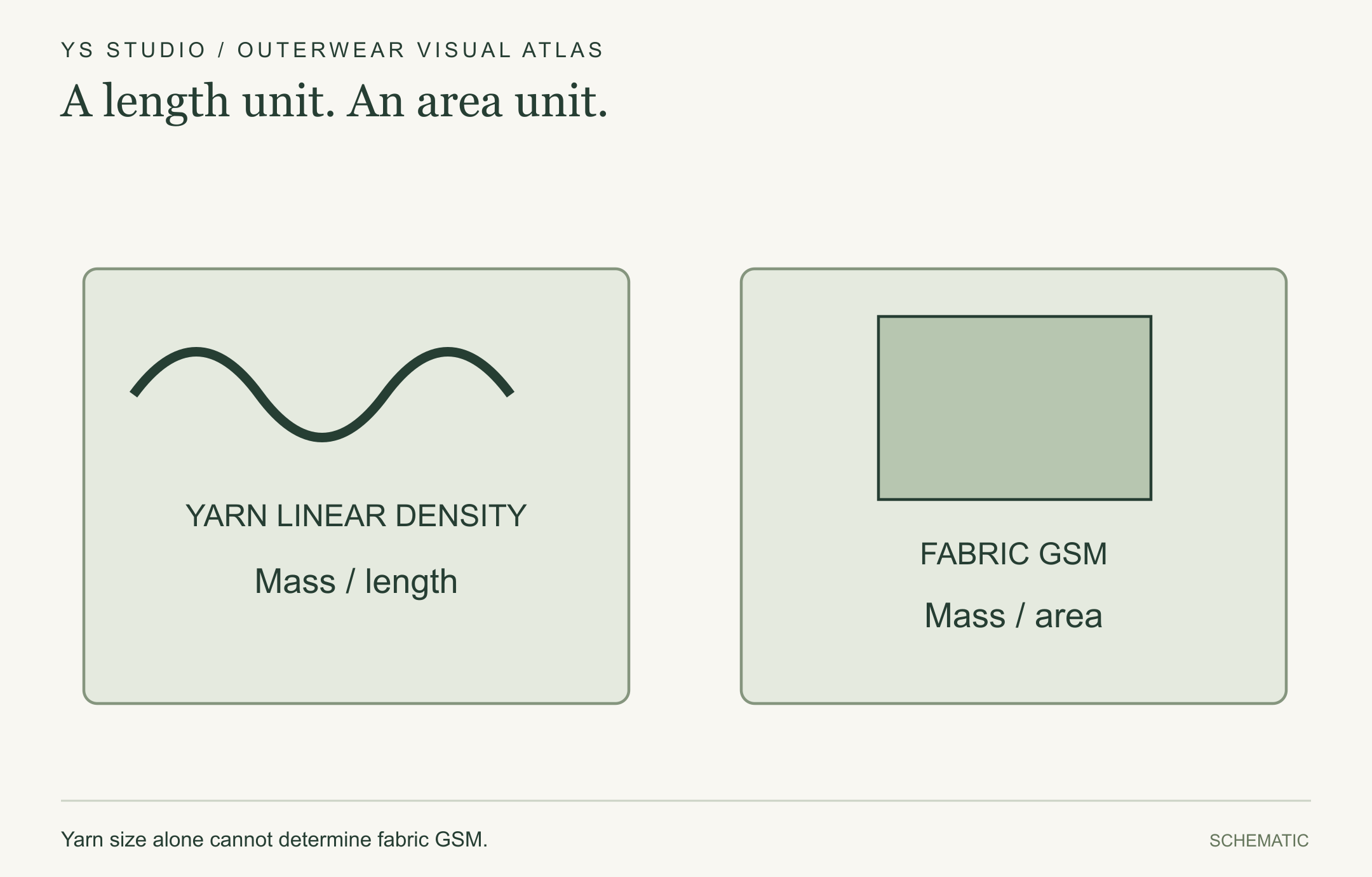
Yarn linear density and fabric mass per area describe different objects. Keep yarn count and fabric GSM as separate fields.
Yarn size alone cannot determine fabric GSM.
Keep the units in context
Yarn specifications describe a strand used to make a textile. Fabric mass per area describes the resulting fabric. Yarn count systems differ, so always keep the number with its unit and state whether it applies to warp, weft, filament or an assembled yarn.
Ask for the whole construction
When reviewing lightweight shell options, request yarn information together with weave, density, mass per area, usable width and finish. Identify the supplier article and lot so that a later report can be matched to the actual fabric.
Avoid a shortcut quality ladder
A smaller yarn-size number is not a complete definition of premium quality. A delicate visual effect can be desirable for one product, while another brief needs a different hand or durability balance. Choose the target, then inspect and test the candidate.
Write the comparison sheet
Put the same fields in every supplier comparison. Mark unknown fields and request clarification. Keep yarn size, fabric weight and test performance as separate columns, and add a final column for the design team’s sample evaluation.
Questions buyers ask
Can I derive fabric GSM from a denier number?
Not from that number alone. Fabric construction and density are also required.
Does a lighter shell always make a better jacket?
No. Evaluate it against the garment’s intended use, appearance and quality requirements.
Sources and further reading
External sources inform the technical explanations above. Standards and test requirements can vary by market; check current documents for your product.
This guide supports early product decisions. Confirm material data, applicable labeling rules and performance claims for the specific product and destination market.