UNDERSTAND IT VISUALLY
Cut a sheet, or fill a chamber.
Sheet batting is cut with panels; loose fill is placed into compartments. The format changes handling, containment and assembly.
Match the fill format to the construction plan.
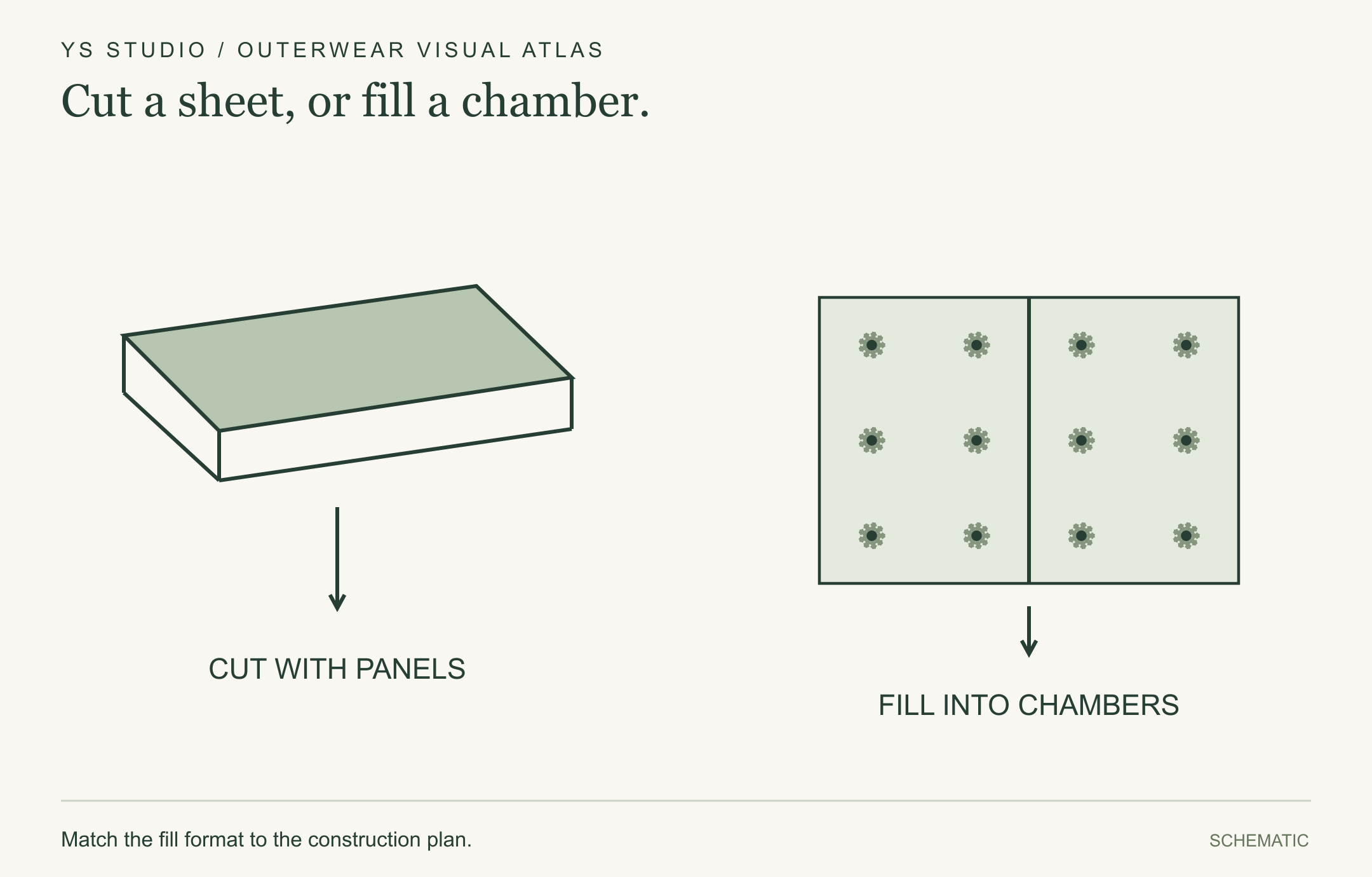
Sheet or web batting
Sheet batting has a defined format and can support even coverage across a panel, depending on handling and construction. Thickness, resilience, fiber migration, edge behavior and sewing compatibility should be checked on the intended shell.
Loose fill
Loose fill is placed into compartments and requires controlled distribution and containment. Chamber design, filling access, fill mass and process control affect the finished appearance.
Make the supplier brief measurable
Record material article and composition, fill mass or mass per area, target thickness if used, quilting plan, garment size and tolerance. Approve a sewn sample and inspect after packing, wear simulation or care tests relevant to the product.
Questions buyers ask
Which is warmer?
Format alone does not determine warmth. Compare the actual material quantity and finished-garment performance.
Can sheet padding be used in quilted designs?
Often it is developed with quilting, but the specific batting, stitch pattern and recovery should be evaluated together.
Sources and further reading
External sources inform the technical explanations above. Standards and test requirements can vary by market; check current documents for your product.
This guide supports early product decisions. Confirm material data, applicable labeling rules and performance claims for the specific product and destination market.