UNDERSTAND IT VISUALLY
The join and the thread formation.
A seam defines how fabric components meet; a stitch defines thread formation. The seam arrangement and stitch designation belong together in the tech pack.
Add allowance, density, thread and edge finish.
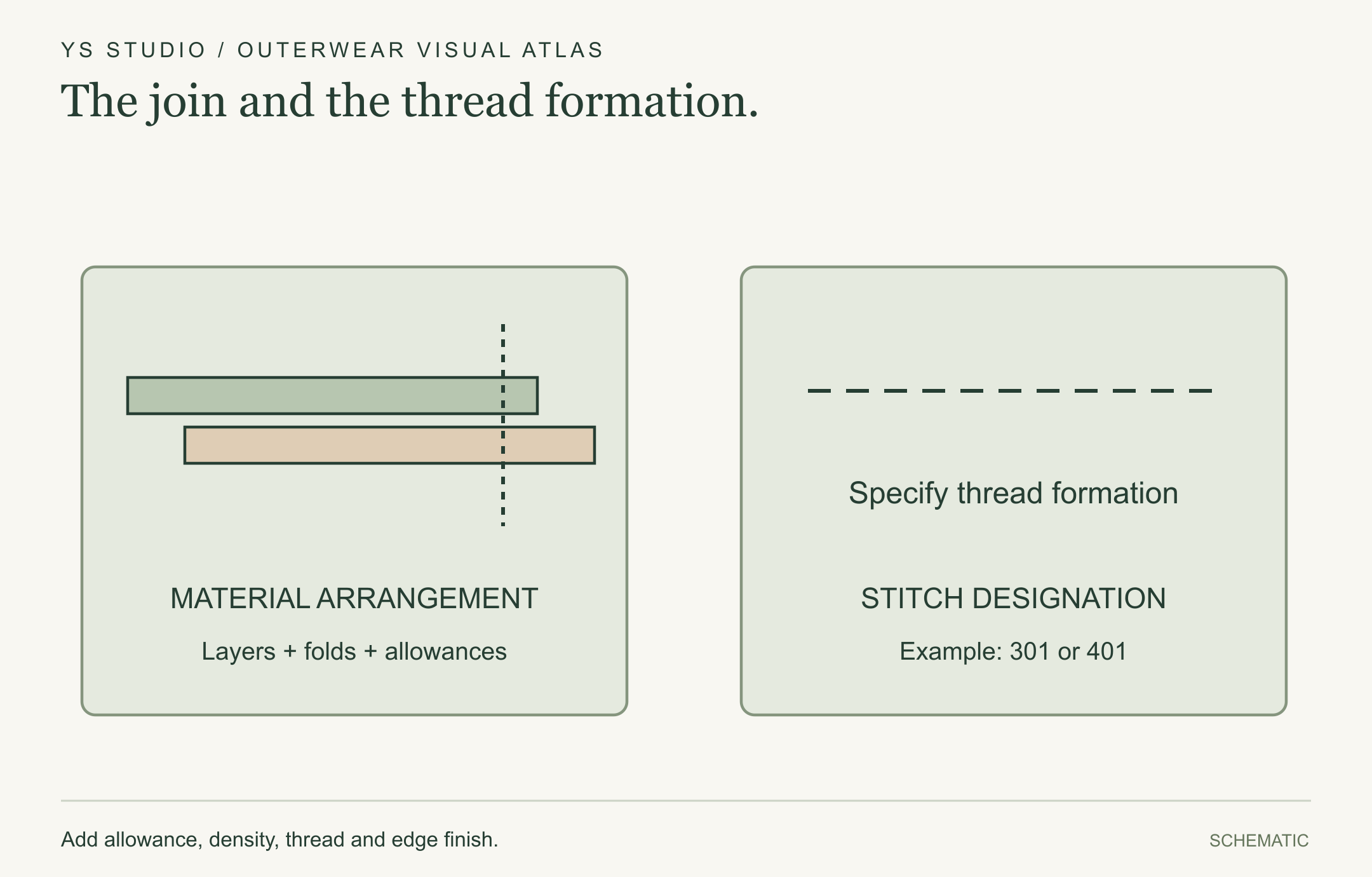
Describe the join
A seam drawing shows material layers, folds, overlap and allowances. A stitch designation identifies the thread formation used to secure that arrangement. Multiple stitch types can be used with a seam arrangement, so one label cannot always replace the other.
Add the practical parameters
Record the seam location, allowance, stitch type, stitch density with units, thread, needle, edge finish and any reinforcement. For insulated outerwear, also show whether insulation is included in the seam or removed from an allowance.
Make a representative seam trial
Use the actual shell, lining, fill stack and trims where possible. Review seam bulk, appearance, movement and leakage as relevant. Keep any material substitutions visible in the record.
Approve the result
Use a seam sample and a written detail to anchor the specification. A trade term may be interpreted differently across teams; an annotated cross-section helps resolve ambiguity before bulk assembly.
Questions buyers ask
Does “lockstitch” fully define a seam?
No. The material arrangement, allowance and other assembly details still need to be stated.
Should every seam use the same stitch?
Choose for the actual construction, material and performance needs, then verify the sample.
Sources and further reading
External sources inform the technical explanations above. Standards and test requirements can vary by market; check current documents for your product.
This guide supports early product decisions. Confirm material data, applicable labeling rules and performance claims for the specific product and destination market.