UNDERSTAND IT VISUALLY
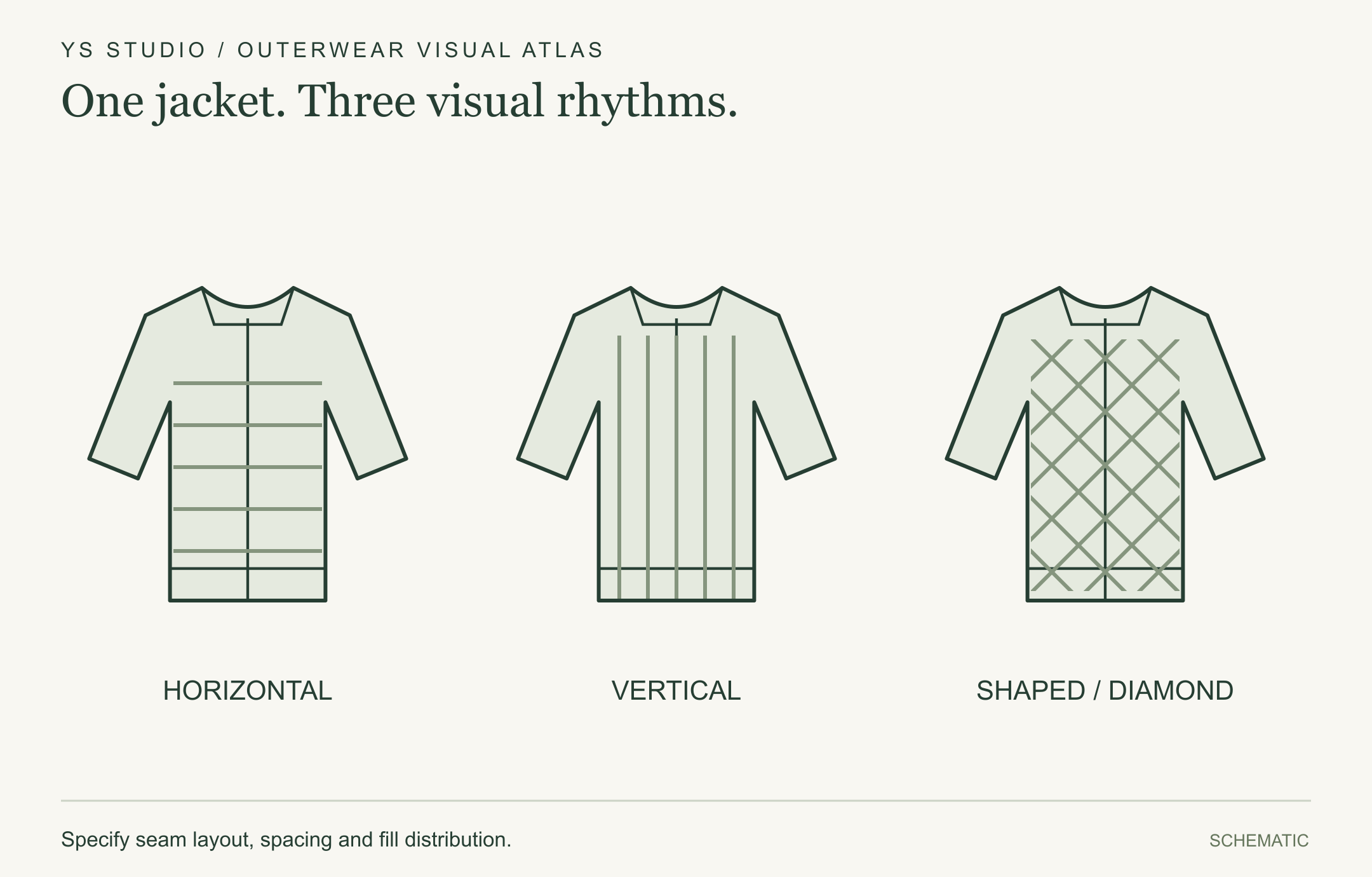
One jacket. Three visual rhythms.
Horizontal, vertical and diamond quilting change the visual language and the chamber geometry. None is a universal warmth grade.
Specify seam layout, spacing and fill distribution.
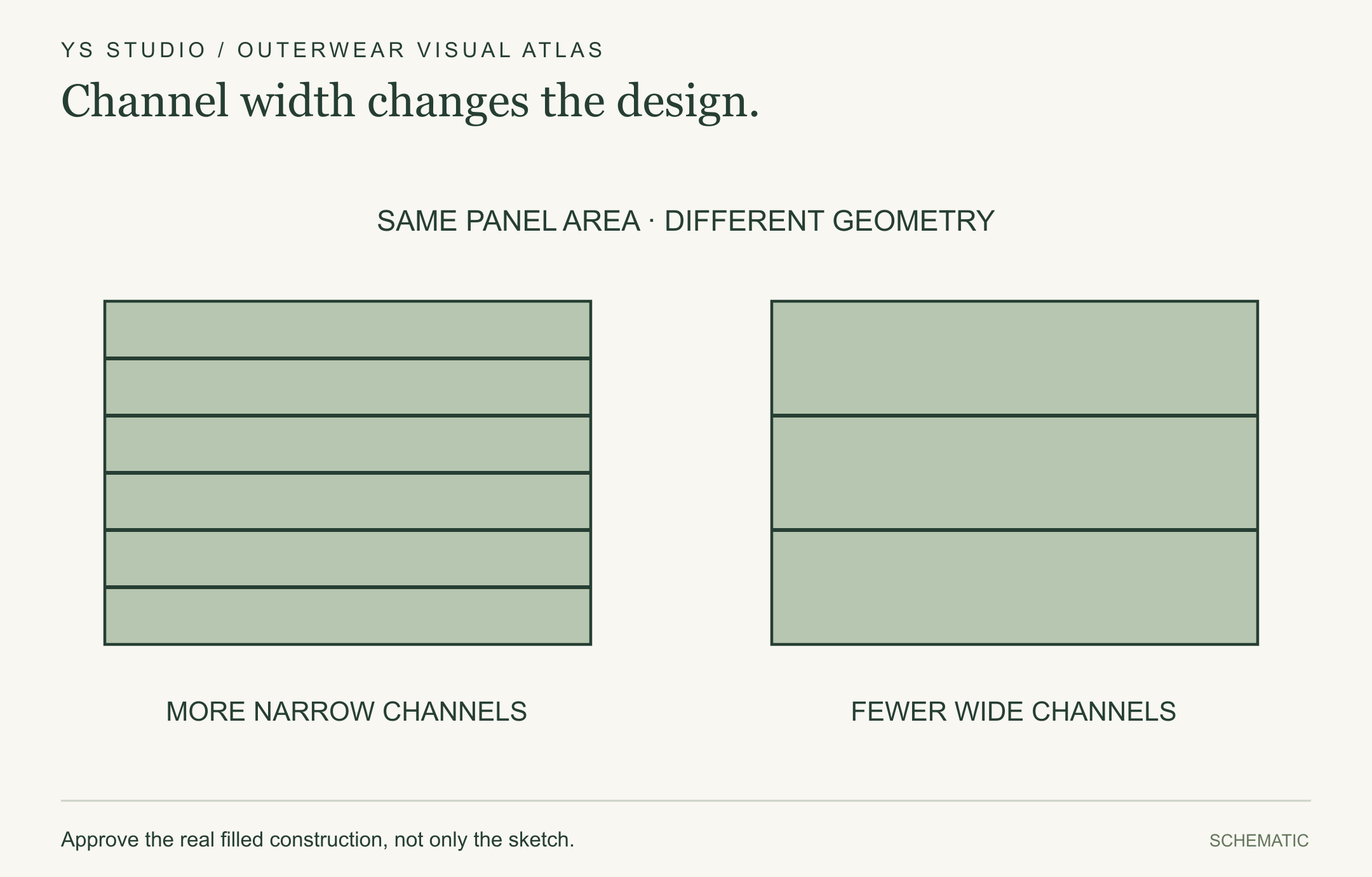
Channel width changes the design.
Compare narrow and wide chambers with their seam positions. The drawings show geometry, not a tested ranking of thermal performance.
Approve the real filled construction, not only the sketch.
Pattern is both visual and functional
Horizontal channels are familiar and easy to read. Vertical or offset channels can change silhouette and visual proportion. Shaped or mixed channels can follow design lines or place different volumes across the body. Every new seam line also changes assembly and the distribution of insulation.
Develop the geometry
Set finished channel width, seam allowance, stitch type, panel dimensions, fill allocation and any alignment rules. Confirm how the pattern behaves at armholes, side seams, pockets, hems and size grading.
Check after construction
Review channel consistency, fill balance, puckering, leakage and garment movement on a finished sample. A flat sketch may not reveal where fill compresses or a seam becomes difficult to sew.
Questions buyers ask
Does narrower quilting always reduce fill movement?
Not by itself. Chamber geometry, fill amount, materials, sewing and use all matter; define and inspect the actual construction.
Can the quilt pattern be a brand signature?
Yes, as a visual design language, provided construction and performance are validated separately.
Sources and further reading
External sources inform the technical explanations above. Standards and test requirements can vary by market; check current documents for your product.
This guide supports early product decisions. Confirm material data, applicable labeling rules and performance claims for the specific product and destination market.