UNDERSTAND IT VISUALLY
A jacket quote has several levers.
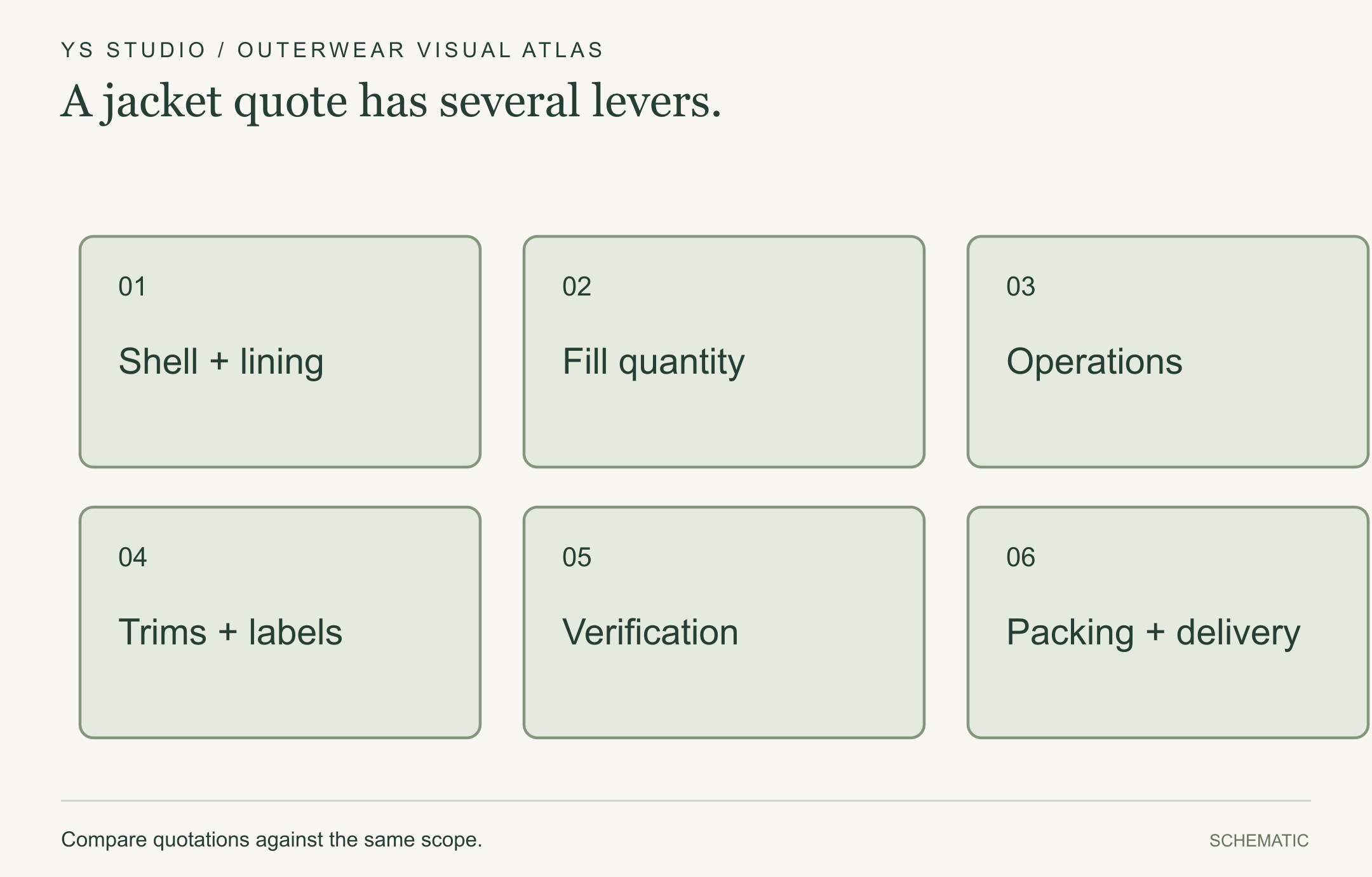
The map separates materials, insulation, operations, trims, verification and packing. It shows cost categories with no universal percentage split.
Compare quotations against the same scope.
Build a shared cost map
Start with the approved design and BOM rather than a reference image alone. Identify which decisions are fixed and which can change. Ask the partner to explain the effect of proposed changes on both the product and quotation assumptions.
Separate the main levers
Shell and lining choice affect material sourcing and consumption. Insulation type and quantity affect the filling brief. Pattern complexity, quilting, baffles, pockets and seam details affect operations. Trims, labels, packaging and required verification add further scope.
Make comparisons like for like
Record quantity per style, color and size allocation, selected materials, sample scope, testing, packing, delivery terms and currency. A change in one assumption can make two prices incomparable.
Prioritize the wearer’s experience
Decide which details carry the design: silhouette, material hand, volume, function or finish. Review a proposed adjustment in a sample before accepting savings. No universal price or percentage split can substitute for a current, project-specific quote.
Questions buyers ask
Can a photograph produce an accurate final quote?
It can start a discussion. A reliable quotation needs agreed materials, construction, quantities and commercial assumptions.
Does removing one feature always reduce the final price?
The effect depends on the construction, material and production context. Ask for a revised quote and sample implications.
Sources and further reading
External sources inform the technical explanations above. Standards and test requirements can vary by market; check current documents for your product.
This guide supports early product decisions. Confirm material data, applicable labeling rules and performance claims for the specific product and destination market.