UNDERSTAND IT VISUALLY
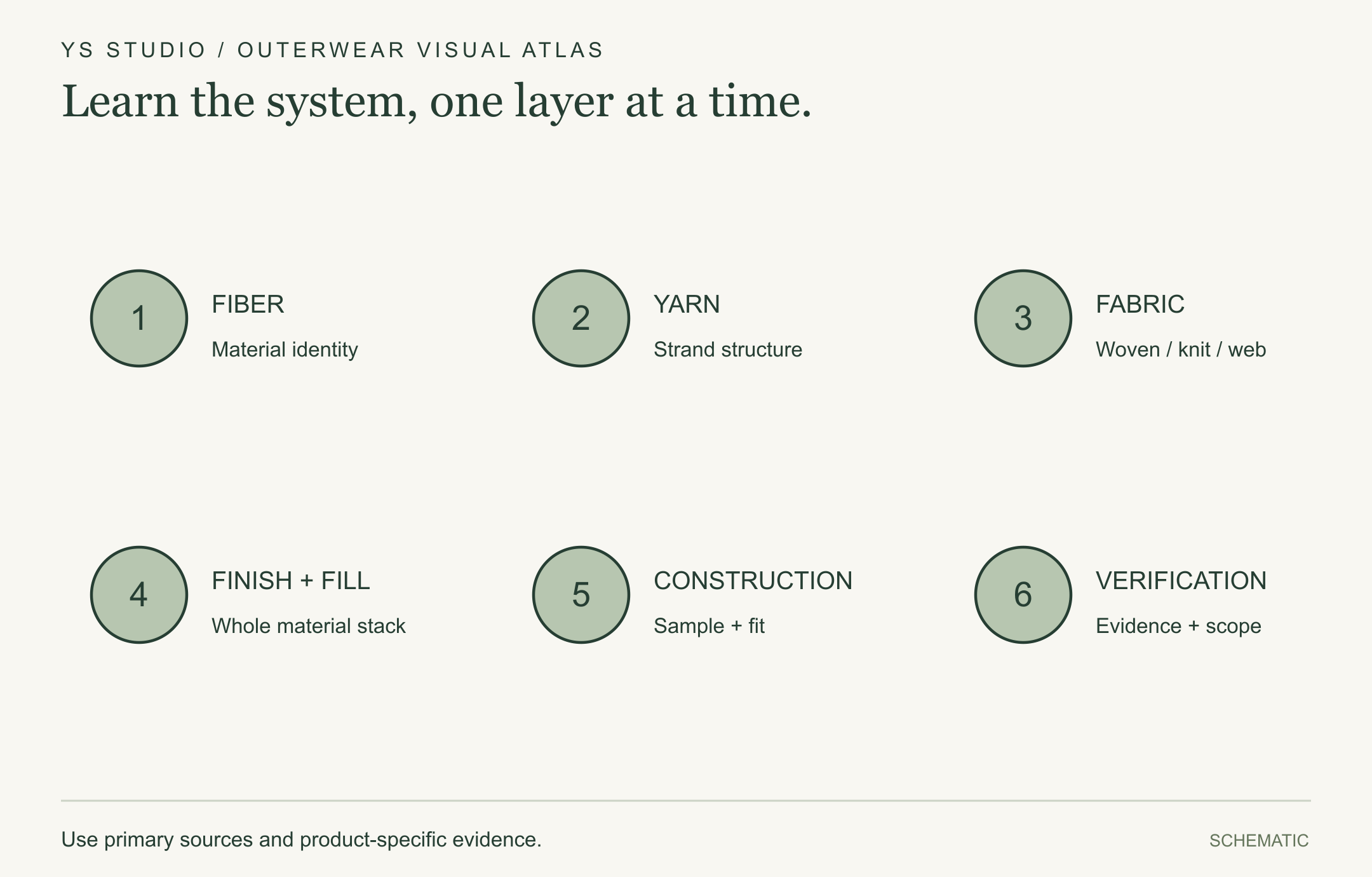
Learn the system, one layer at a time.
Move from fibers and yarns to fabric, finish, insulation, garment construction and verification. Pair books with swatches and real samples.
Use primary sources and product-specific evidence.
Learn the vocabulary
Books can connect material names with construction and visual examples. Fashionary’s Textilepedia is organized around textile terminology; Fabric for Fashion includes a guide and a separate swatch-based learning resource. Publisher pages describe their scope, not a substitute for reading the books.
Add physical comparisons
Build an identified swatch set for shell, lining and insulation. Record what each sample demonstrates: fiber, weave, mass per area, drape, finish or fill form. Seeing and handling actual materials helps separate appearance from performance.
Learn through a product
Choose one jacket concept and map its layers, seams, fill and fit. Turn unknowns into questions for a designer, material supplier or factory. Keep a record of the answers and confirm which are general explanations versus specifications for that sample.
Verify important claims
Use laboratory and standards-body guidance to choose the right test scope. Some full standards are paid documents; public summaries show scope but not every requirement. Keep methods, versions and supplier data current. These guides offer a focused learning route, not an exhaustive replacement for professional training.
Questions buyers ask
Are book pages reproduced in this library?
No. The diagrams and writing are original explanations, with links to external references for further study.
Can a public standards summary replace the full method?
No. It explains scope; laboratories need the relevant complete method and current requirements.
Sources and further reading
External sources inform the technical explanations above. Standards and test requirements can vary by market; check current documents for your product.
This guide supports early product decisions. Confirm material data, applicable labeling rules and performance claims for the specific product and destination market.