UNDERSTAND IT VISUALLY
Put the grams on the garment.
A fill map assigns targets to the hood, collar, body and sleeves. It links an overall insulation concept to individual panels.
Record reference size, zone targets and tolerances.
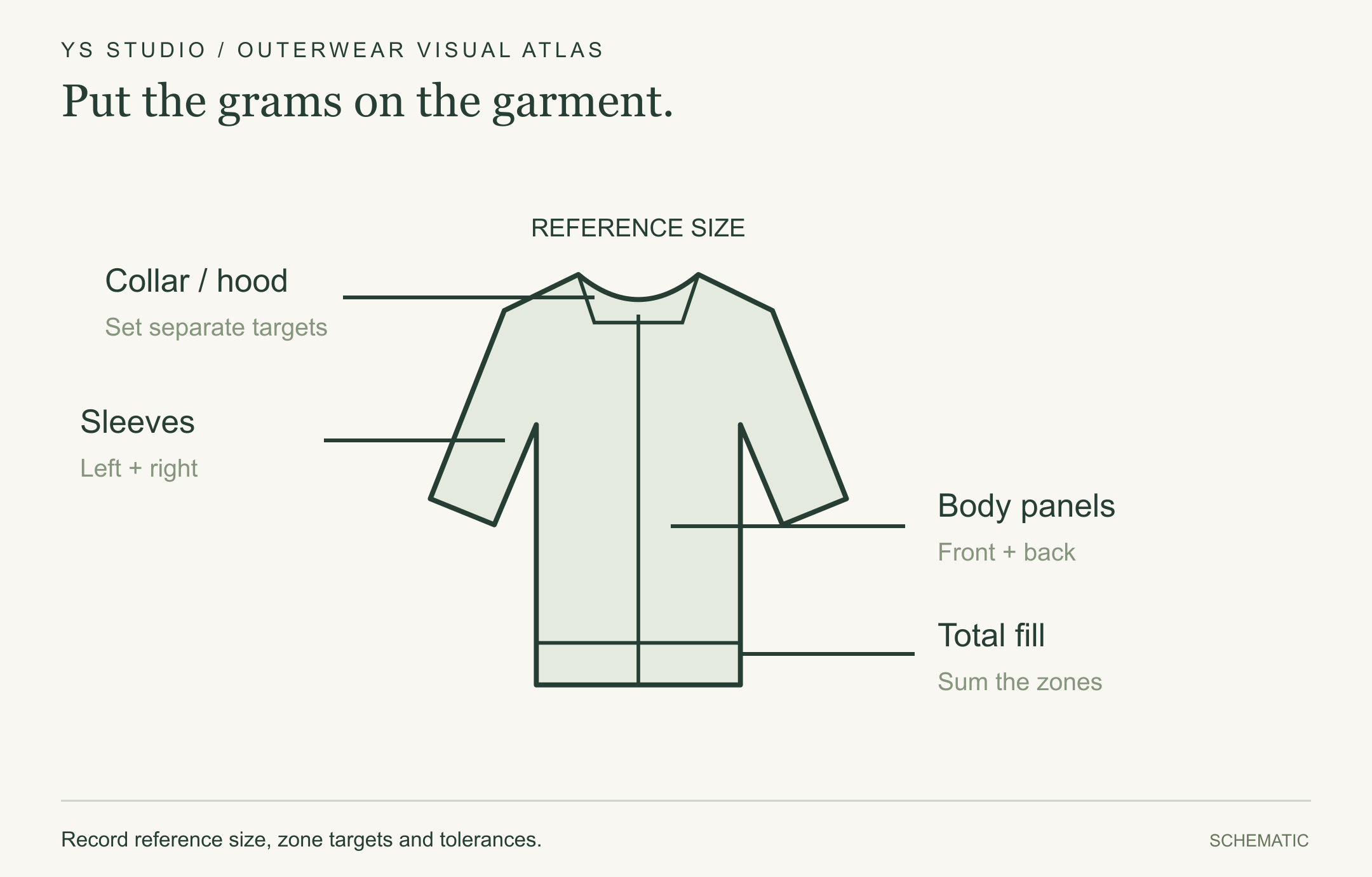
From total grams to a garment map
Two garments with the same total fill mass can feel and look different if their insulation is distributed differently. The hood, collar, front, back and sleeves may have different volume, exposure and movement requirements.
How to document it
Create a panel diagram with target grams per chamber or panel, identify the size used for the reference, and state whether figures are pre-production targets or approved bulk values. Define practical tolerances with the supplier and test finished samples for appearance and hand feel.
What the map cannot do
A fill map is not a thermal test. It supports repeatability and design intent; comfort still needs to be evaluated with garment construction, materials, fit, layering and use conditions.
Questions buyers ask
Should every size use the same fill weight?
Not necessarily. Grading can change garment area and volume. Define how fill targets scale across sizes and verify representative sizes.
Can panel maps reduce cold spots?
They can help identify intended distribution and support development checks, but warmth depends on the whole garment system.
Sources and further reading
External sources inform the technical explanations above. Standards and test requirements can vary by market; check current documents for your product.
This guide supports early product decisions. Confirm material data, applicable labeling rules and performance claims for the specific product and destination market.