UNDERSTAND IT VISUALLY
Same mass. Different measured volume.
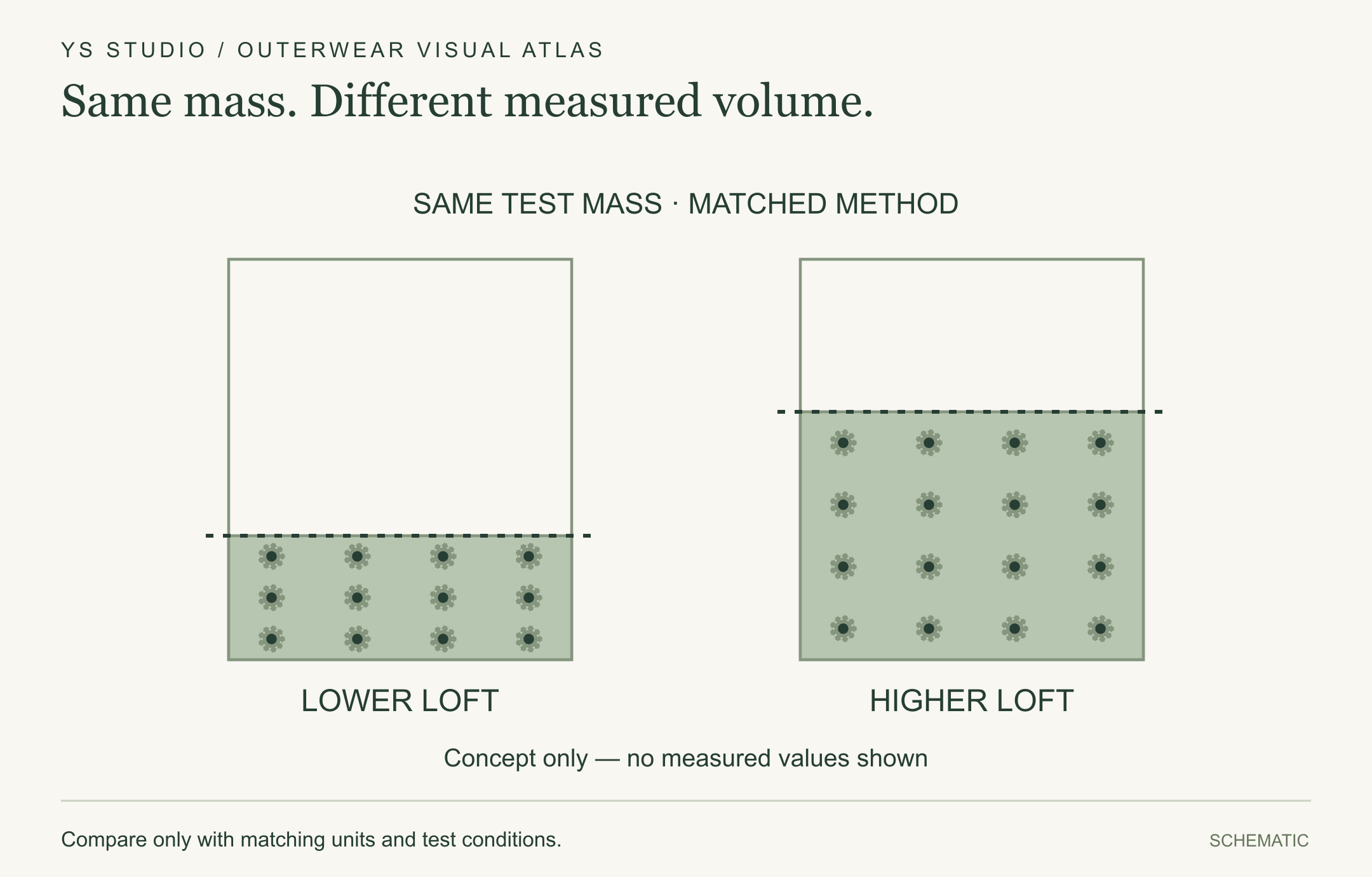
Fill power compares loft under a specified laboratory method. These cylinders illustrate the idea, with no product test results implied.
Compare only with matching units and test conditions.
The number has a testing context
Fill-power testing uses a specified down mass and measuring cylinder after sample preparation. Different systems report different units and can condition the sample differently. Conditioning matters because moisture, heat, compression, shipping and storage can affect loft before measurement.
Build comparability into sourcing
When reviewing supplier reports, capture the report date, laboratory, sample identity, method, units and conditioning. If a benchmark is important to the product promise, agree the test method before bulk sourcing and use the same method for incoming verification.
Do not turn a lab number into a warmth guarantee
Finished-garment performance also depends on fill mass, baffle geometry, shell and lining, fit, wind exposure, moisture and activity. A material test is one piece of evidence, not a universal comfort rating.
Questions buyers ask
Are cubic inches per ounce and cubic centimetres per gram identical?
They are different units. Any comparison should confirm the test cylinder and conditioning method too.
Should product pages publish fill power?
If you publish it, include enough test context to make the claim interpretable and keep the evidence tied to the actual material used.
Sources and further reading
External sources inform the technical explanations above. Standards and test requirements can vary by market; check current documents for your product.
This guide supports early product decisions. Confirm material data, applicable labeling rules and performance claims for the specific product and destination market.