UNDERSTAND IT VISUALLY
Airflow and fill escape are different.
Air permeability measures airflow. Downproofness evaluates plumage retention. A result from one does not replace the other.
Agree relevant fabric and finished-product tests.
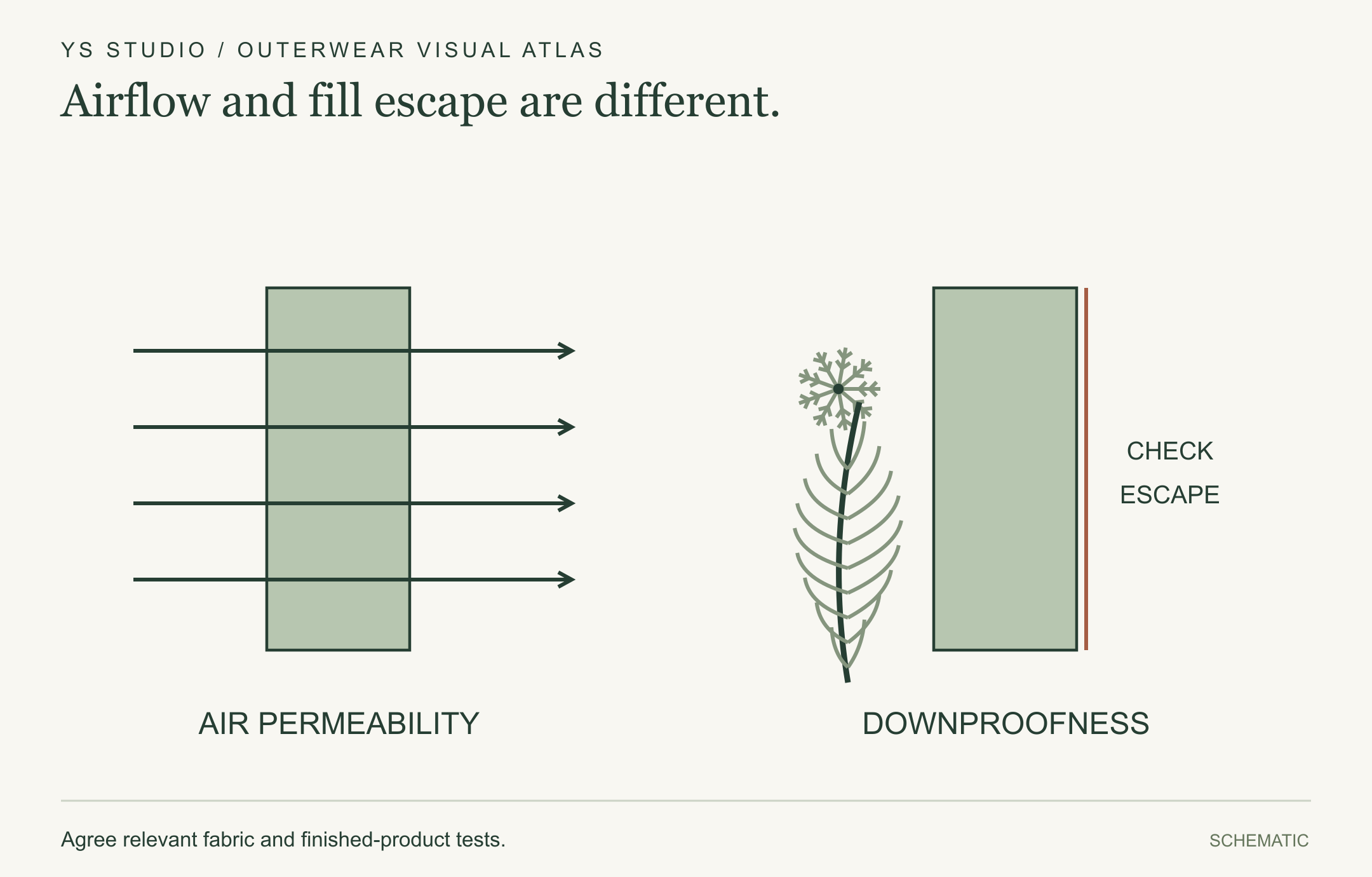
What each test addresses
Air permeability quantifies airflow through a fabric under a defined pressure and method. Downproofness evaluates plumage escape from a fabric sample or constructed specimen under a defined procedure. The methods answer related but different questions.
Where leakage can originate
Fill escape can relate to the fabric, needle holes, stitch density, seam construction, damaged areas or handling. Testing only a fabric swatch does not isolate every finished-product risk.
A practical quality plan
Agree the material test and acceptance criteria with the buyer and supplier. Then inspect the garment construction and, when appropriate, test a finished product using a defined method. Record the sample and lot so results stay traceable.
Questions buyers ask
Does low air permeability guarantee no down leakage?
No. It is not a direct substitute for a relevant downproofness test.
Should I test fabric or a finished jacket?
Both may be useful for different questions. Finished-product checks include seams and construction effects.
Sources and further reading
External sources inform the technical explanations above. Standards and test requirements can vary by market; check current documents for your product.
This guide supports early product decisions. Confirm material data, applicable labeling rules and performance claims for the specific product and destination market.