UNDERSTAND IT VISUALLY
A cluster is not a feather.
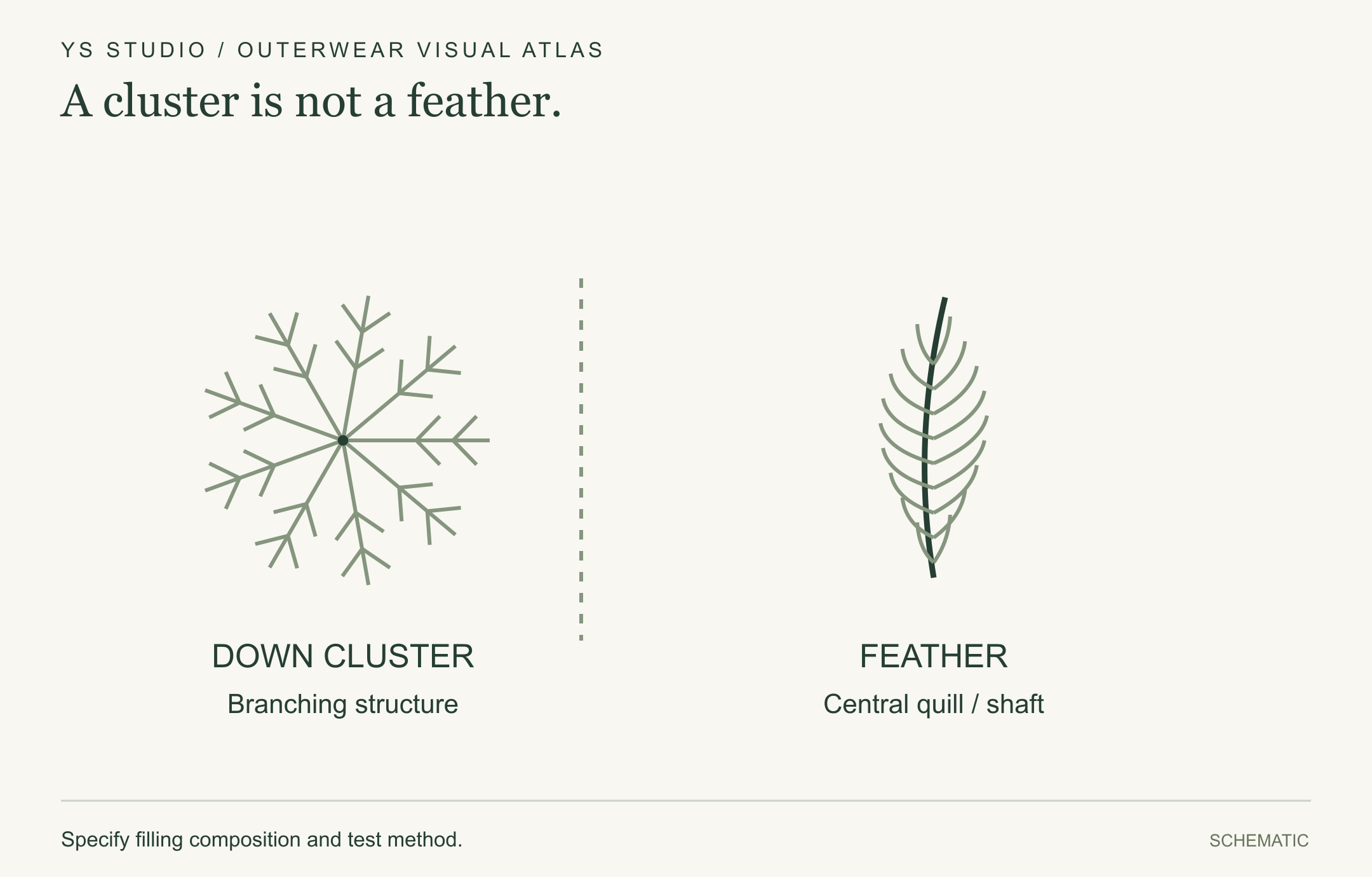
Compare a branching down cluster with a feather’s central quill. The structures differ; composition and loft still need separate evidence.
Specify filling composition and test method.
The basic distinction
Down clusters have a central point with fine filaments extending outward. Feathers have a central shaft (quill) with barbs along it. Commercial filling can contain down clusters, feathers, and other plumage components in proportions defined by the applicable labeling rules.
Why a blend changes the brief
A higher down share can change loft, hand feel, compressibility, cost, and the way a filling behaves in a garment. The final result also depends on fill power, grams of fill, distribution, baffle design, shell, fit, and intended use. A percentage alone cannot predict warmth.
What a buyer should specify
Ask for the legally applicable composition wording, the test method and report, the species claim if relevant, the target fill weight, and whether the figures refer to the filling material or a finished garment. Confirm the market’s labeling rules before artwork approval.
Questions buyers ask
Does 90% down mean 90% of the jacket is down?
No. It describes the stated composition of the filling under the relevant labeling and test rules, not the proportion of the garment by weight.
Does a higher down percentage always mean a warmer jacket?
No. Warmth depends on the amount and distribution of fill, loft, construction, fit, and use conditions as well.
Sources and further reading
External sources inform the technical explanations above. Standards and test requirements can vary by market; check current documents for your product.
This guide supports early product decisions. Confirm material data, applicable labeling rules and performance claims for the specific product and destination market.